
Article summary
How do you currently give feedback to new team members as they’re onboarding in their new role? How do you set clear expectations for them of what success looks like?
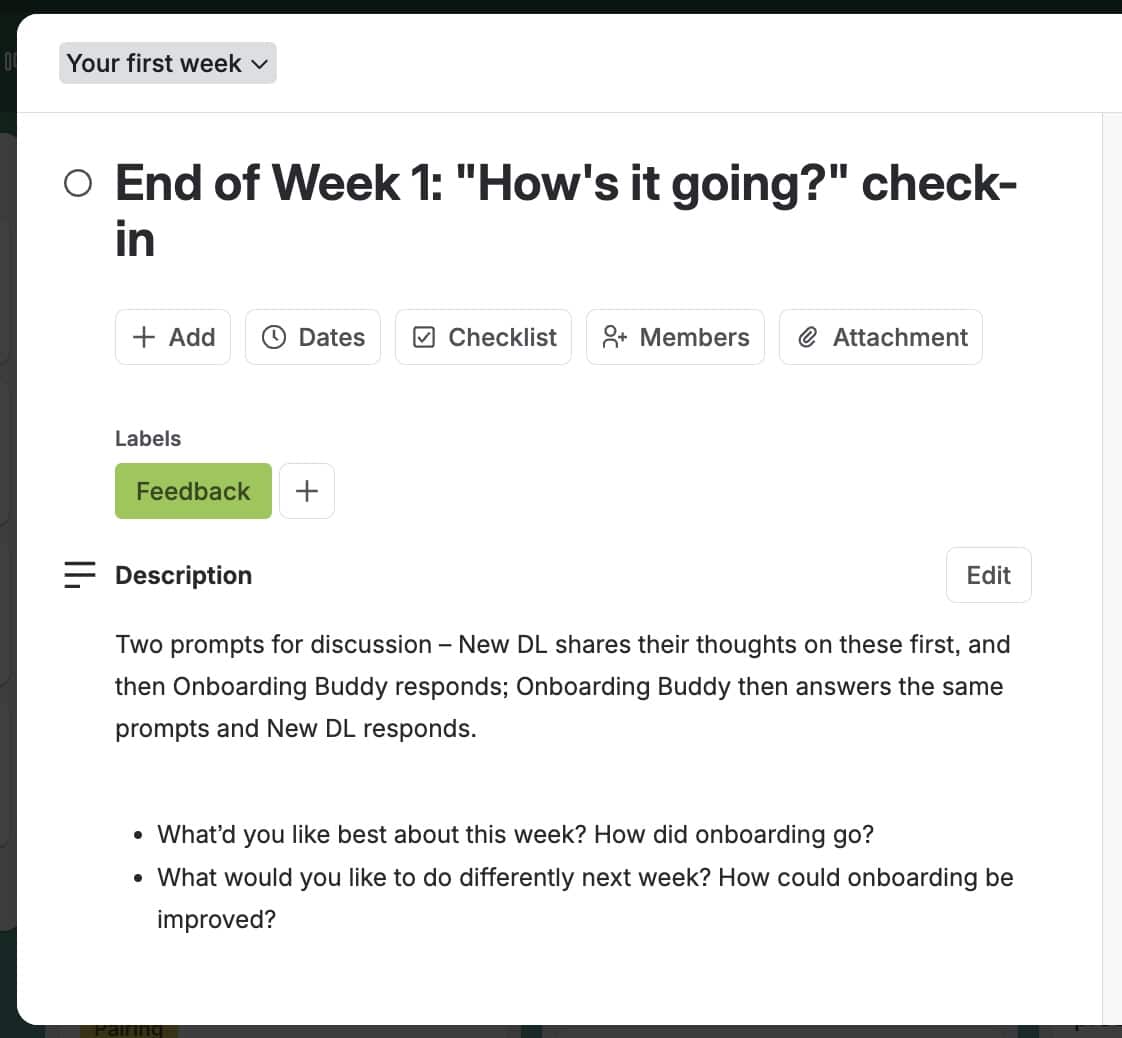
When we onboarded two delivery leads to the Ann Arbor office last year, we experimented with a lightweight informal feedback framework. This framework allowed us to make space for conversations on what was going well, what support was needed, and where expectations might be unclear. This fits really well with our continuous improvement mindset at Atomic. We know there’s always room for everyone involved to learn and grow!
Many feedback frameworks exist, but they felt overly complex for what we needed to check in regularly with our onboarding delivery leads. The Liked Best/Next Time framework is a tool we learned about at a ZingTrain seminar. It’s similar to the mindsets we bring to a team retrospective conversation, but with a much smaller scope.
Overview of Liked Best/Next Time
Liked Best / Next Time is a lightweight feedback framework from ZingTrain that keeps feedback positive, specific, and future-focused. Instead of framing feedback as what someone did right or wrong, it asks people to reflect on what worked well and what they want to try differently the next time they face a similar situation. ZingTrain contrasts this with the “compliment sandwich.” The useful feedback is not hidden between niceties, and the conversation stays focused on learning from the experience rather than judging the person.
Breaking it Down
In a one-on-one training context, the person being trained goes first:
- What did they like best about their own performance?
- What did the trainer like best, including any additional positive observations?
- What would the trainee do differently next time?
- What specific suggestions or expectations does the trainer want them to focus on next time?
That order matters because it gives the trainee space to notice and own both their strengths and their opportunities for improvement before the trainer adds more. The trainer’s role is to reinforce what went well, help prioritize the “next times” and keep the feedback concrete enough to act on. “Do better” is not a behavior; “smile before picking up the phone” or “practice using the hold button” is.
The same pattern can scale to groups, projects, events, or team changes. A facilitator asks the group what they liked best and what they want to make sure to repeat, then asks what they might do differently next time. A note-taker captures the discussion in a shared place, often with initials so people can clarify later. The goal in the first pass is brainstorming, not debate: get the feedback visible, look for themes, then decide who will review it and what actions or proposals should come out of it.
The bigger cultural idea is that feedback becomes less scary when it is frequent, expected, and tied to shared goals. LB/NT gives teams a common language for continuous improvement: acknowledge what is working, name what could work better, and turn that into practical next steps.
If you’d like to read more, ZingTrain offers a free-to-access webinar on the topic!
How we implemented it
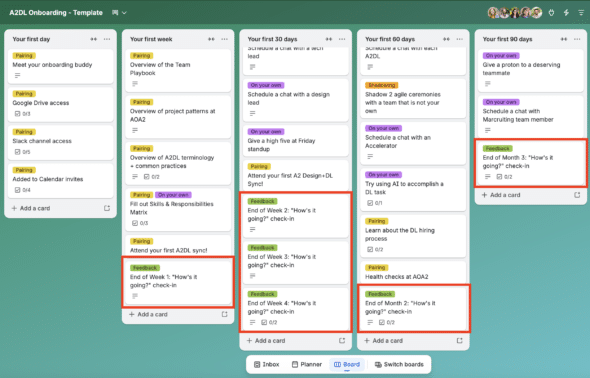
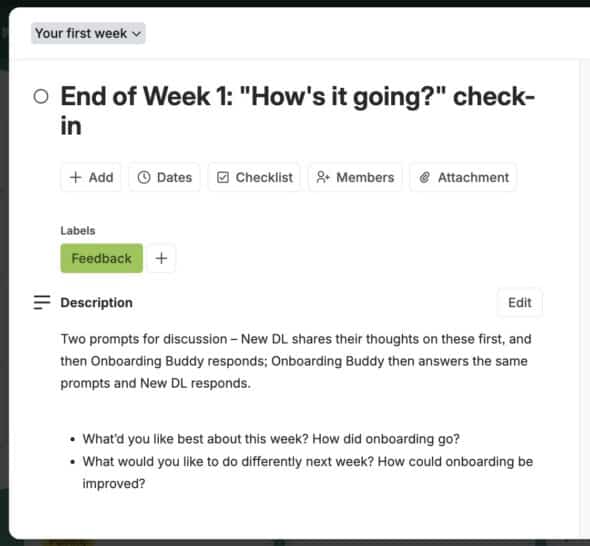
Our incoming delivery leads were already paired with a fellow delivery lead onboarding buddy. So we tried out this framework as part of the scheduled time-based check-ins. You could use it at any time, but we targeted weekly for the first month, and then monthly for the rest of the new team members’ first 90 days, at the end of the:
- First week
- Second week
- Third week
- Fourth week
- Second month
- Third month
We found it gave us useful insights not just for the new team members’ progress, but also for our onboarding process in general. If your team runs onboarding similarly, we’d love to hear how you structure feedback check-ins!