

At Atomic Object, kickoff meetings are a cornerstone of how we start projects. We’ve built significant internal infrastructure around planning and delivering them. That’s because how you begin sets the tone for everything that follows.
For longer-term engagements, though, the kickoff is only part of the story. Periodic on-site visits can make a measurable difference in project outcomes, and investing in them with the same intentionality can be the difference between a project that drifts and one that stays aligned. This is especially true when client teams are remote. Here’s why a mid-project on-site visit might be exactly what your project needs.
An Opportunity to Realign
The middle of a project can be a vulnerable time. The energy from the kickoff has faded, but the finish line isn’t yet in sight. Misalignments that started small have had time to compound. When you’re deep in the day-to-day rhythm of delivery, it’s hard to break away from the tasks at hand and assess the project as a whole.
A mid-project on-site creates that space. Stepping away from daily practices gives both teams room to evaluate overall project health, revisit goals, and pressure-test assumptions with fresh eyes.
On a recent project, we dedicated one of three on-site days to building a Product Backbone with our client. The exercise surfaced an important point: our original assumptions about milestones had shifted, and the estimated scope had grown significantly beyond what we’d planned at kickoff. Because we were all in the room together, we could tackle that challenge collaboratively. We mapped out the remaining work and negotiated priorities, which would have been much harder to do over Slack or Zoom.
Strengthening Relationships and Energizing the Team
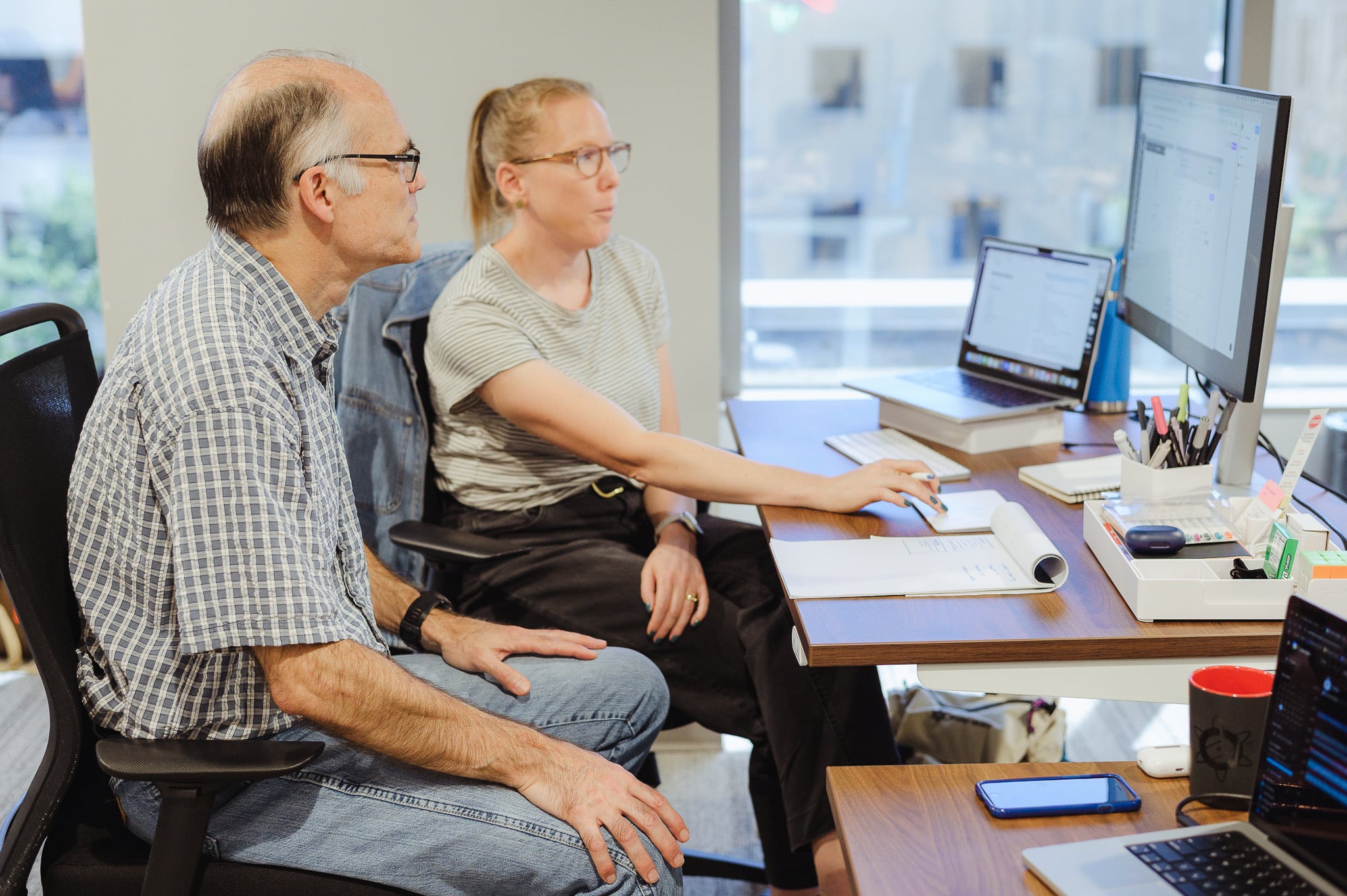
While Atomic product teams are co-located, we often work with remote clients. That makes on-sites one of the few opportunities for everyone to actually be in the same room. Over time, remote teams can start to lose the “texture” of each other: who’s stressed, what’s uncertain, and what’s going unsaid.
In-person time cuts through that. Face-to-face conversation rebuilds trust, surfaces what tends to get missed on a Zoom call, and gives both teams a chance to recalibrate not just on the work, but on each other. There’s also something to be said for marking progress together. Stepping back from the sprint-to-sprint rhythm to acknowledge how far the project has come can re-energize a team.
Beyond the work itself, on-sites are an investment in the relationships that make hard projects possible. Sharing meals, grabbing coffee, or just having unstructured time together lets people connect on a more personal level. These moments strengthen teams and help set the project up for long-term success.
Tackling Upcoming Work Together
Beyond reflection, on-sites are a natural opportunity to get ahead of upcoming work. We often work in complex, unfamiliar industries where the work requires a deep understanding of the customer’s problem space. These meetings allow us to ask difficult questions, work through ambiguity, and map out problems together. I’ve spent many of these meetings at a whiteboard with clients, and while that kind of collaborative thinking is possible remotely, it flows more naturally in person.
Planning the agenda with your client in advance is key here. Aligning in advance on which upcoming topics or epics need dedicated in-person discovery ensures the team spends time where it matters most.
On a recent on-site, we set aside a full day to dig into a particularly complex upcoming piece of work. We started by listing out all the components of the problem, then prioritized them together. Throughout the day, we moved fluidly between whiteboards, Miro, and Figma, using whatever helped us articulate what we were trying to understand. Being in the same room gave us the flexibility to shift modes and follow the conversation wherever it needed to go, something hard to replicate remotely.
Plan your next mid-project on-site.
Mid-project on-sites are worth the investment. The travel and the time away from regular work aren’t trivial, but what you get in return, a team that’s realigned, re-energized, and working from the same page, is hard to achieve any other way. The middle of a project deserves just as much attention as the beginning.