

Article summary
- Why Visioning Works (Especially When Life is Messy)
- Step 1: Pick a topic that matters to you.
- Step 2: Choose your timeframe.
- Step 3: Take 2 minutes for “prouds”.
- Step 4: Write your first draft (fast and imperfect).
- Step 5: Share it with someone you trust.
- Step 6: Revise (but still don’t aim for perfect).
- Step 7: Bring it to life.
- Giving Yourself a Boost in 2026
Every January, there’s quiet pressure to have it all figured out. Something about the start of a new calendar year triggers many of us to reconsider how we’ve been spending our time, what we’ve been eating, or what we want to accomplish in our lifetimes. We’re juggling full lives, complicated emotions, and a whole lot of unknowns. If you’ve ever stared into the abyss, wondering what you even want in your life, you’re not doing it wrong. You’re just human.
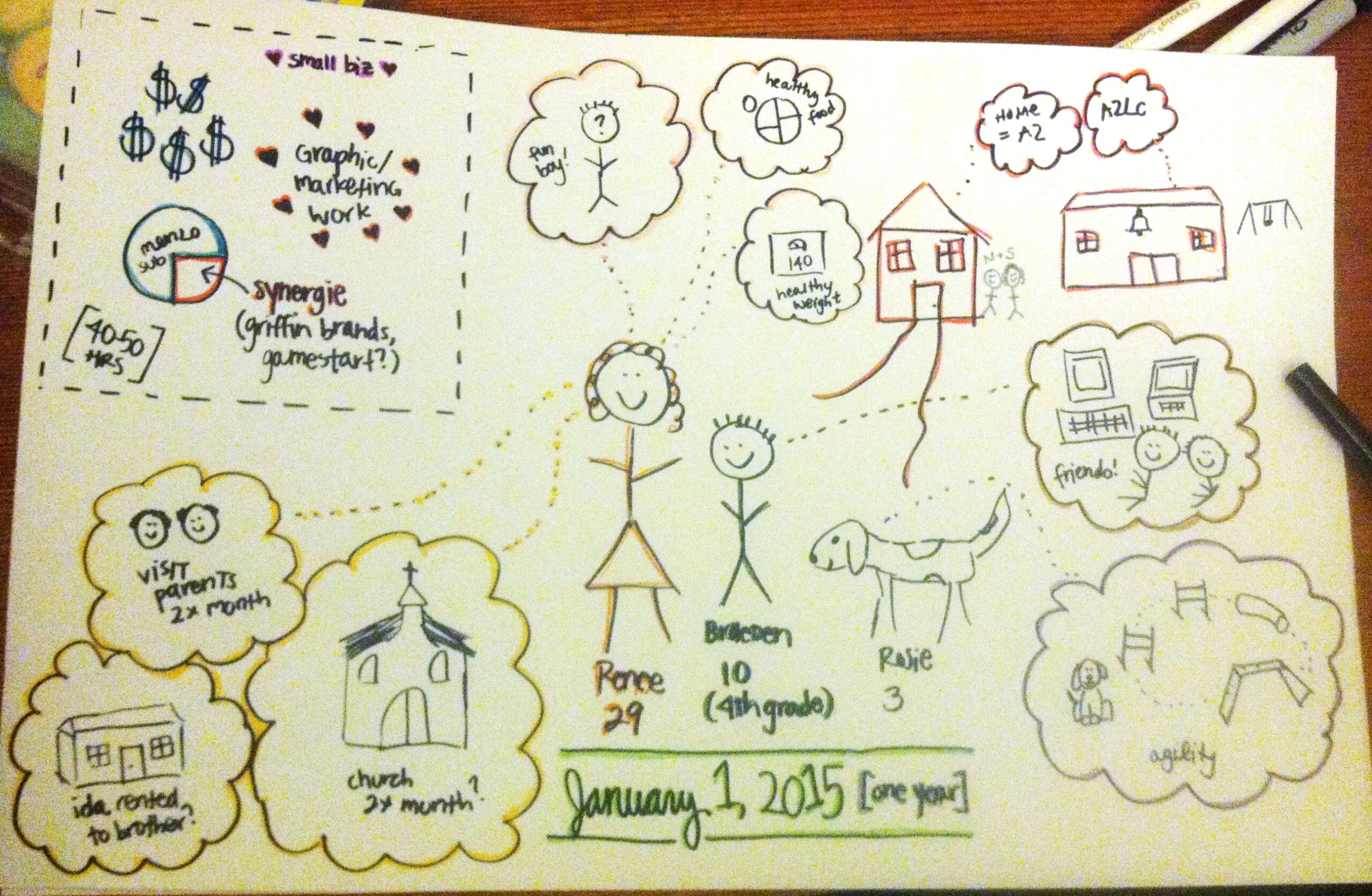
I’ve found the act of creating a vision to be a useful way to dig deep and identify what I subconsciously want my life to look like, both at work and at home. Since I was first introduced to the idea 10–15 years ago, I’ve used it frequently and have even led workshops to help coworkers uncover their own next steps in life.
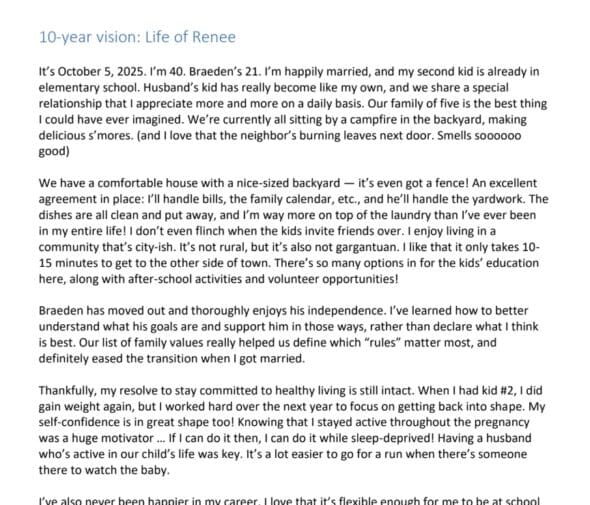
There are a million ways to create a vision, but the method I continue to gravitate toward is one I learned from ZingTrain, the training arm of Zingerman’s Community of Businesses. Their approach to visioning is refreshingly practical: vision isn’t wishful thinking or goal-setting theater. It’s a clear, written description of a desired future that’s specific enough to guide decisions and optimistic enough to pull you forward. ZingTrain teaches that when a vision is vivid, shared, and revisited regularly, it stops being abstract and starts shaping everyday behavior. If you’re curious about the roots of this method, their article “Why and How Visioning Works” is a great place to start.
Pasting magazine clippings on a poster board may be inspirational for others, but ZingTrain’s long-form storytelling model is what gets me motivated. It’s a grounded, practical way of imagining the future that brings me energy instead of guilt.
Why Visioning Works (Especially When Life is Messy)
Visioning isn’t about predicting the future; it’s about choosing a direction. When you take the time to describe what you want your life to feel like, some amazing things happen! You stop reacting and start deciding. What not to do becomes clear. You create optimism that’s rooted in reality. You make better day-to-day tradeoffs.
Most importantly, you give yourself permission to believe that change is possible, even if you don’t yet know exactly how you’ll get there.
Feel ready? Let’s give it a go.
- Step 1: Pick a topic that matters to you
- Step 2: Choose your timeframe
- Step 3: Two minutes of “prouds”
- Step 4: Write your first draft (fast and imperfect)
- Step 5: Share it with someone you trust
- Step 6: Revise (but still don’t aim for perfect)
- Step 7: Bring it to life
Step 1: Pick a topic that matters to you.
Start small and specific. Ask yourself: “What’s one area of my life where I’d like to see meaningful change?”
This could be:
- A work project
- Next steps in your career
- Your health or energy
- Your finances or relationships
You don’t need to solve your entire life. You’re choosing one arena where progress would really matter to you. Take it one step at a time.
Step 2: Choose your timeframe.
Visioning for a full year works beautifully because it’s far enough away to allow real change, but close enough to feel relevant and motivating.
If that’s your jam, pick December 31, 2026 (or similar) as your timeframe. However, you don’t have to think that far out. If you want to see change much sooner than that, pick any other specific date in 2026. Specificity helps your brain believe it’s real.
Step 3: Take 2 minutes for “prouds”.
Before you look forward, it’s helpful to ground yourself in what you’ve already done and get those positive thoughts flowing. Set a timer and write down anything and everything you’re proud of for two minutes straight.
Everything counts! Big accomplishments, doing hard things, even brushing your teeth. This isn’t about bragging. It’s about reminding yourself that you are capable, you’ve done cool things, and you’re ready to take on new challenges.
Step 4: Write your first draft (fast and imperfect).
You’ll write this like a short story from the future, as if we’ve zoomed forward in time to the date you picked.
Pull out that timer again and this time, write nonstop for 20 minutes. Even if you run out of things to write about, keep writing gibberish until more thoughts come to you. You might be surprised at what comes out when you keep pushing. Continuing to write makes it harder for your brain to find time to shut you down. Right now, the only goal is to get something on paper.
- At the top of your paper, write “DRAFT DRAFT DRAFT DRAFT” to remind yourself that this isn’t about getting it right, it’s about getting started.
- Start your first sentence by stating your moment in time (“It’s December 31, 2026, and I’m…”).
- Write from your heart, not your inner critic. Don’t stop, critique, or edit as you go.
- Don’t focus on how you got to that future date; write about what it feels like to already be there and what outcomes you’re enjoying.
- Dream a little bigger than feels comfortable. That will make it more inspiring to read.
Step 5: Share it with someone you trust.
This part can feel vulnerable, but it’s incredibly powerful. Your task is to read your vision out loud to a friend, partner, or colleague you trust.
Prep them ahead of time that you’ll want feedback in four particular areas:
- Where do they hear the most passion when you read it out loud?
- Where do they think you’re too high-level and need more detail?
- What sounds like success to them? How will you know you’ve accomplished it?
- Does this feel possible with some effort, or unrealistic?
Hearing your own words out loud makes the vision feel more real, and their thoughtful feedback will help you strengthen it without losing what matters.
Step 6: Revise (but still don’t aim for perfect).
Once you’ve received feedback and re-read it, edit and revise your vision a few times. Clarify, add detail, and remove anything that doesn’t feel true anymore. This does not need to be a masterpiece. Once you’ve iterated on it six or seven times, that’s plenty. Chances are, it’s directionally good enough, and that’s all you need.
Step 7: Bring it to life.
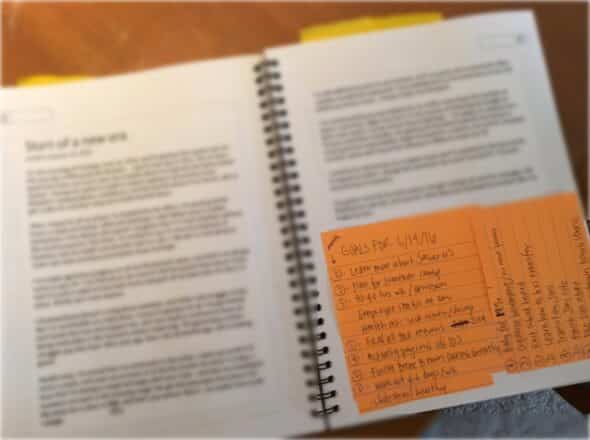
A vision only works if it doesn’t get forgotten. After you’ve got your “good enough” draft, create a to-do list from it and keep it nearby.
- Pull out two or three concrete actions you can take this month.
- Decide where you’ll keep your vision so you’ll actually see it.
- Revisit it monthly and adjust as needed.
Remember: progress doesn’t have to be fast to be meaningful.
Giving Yourself a Boost in 2026
Creating a vision isn’t about controlling the future. It’s about giving yourself a compass. By creating a clear, hopeful picture of 2026, you’re reminding yourself that you’re allowed to want things, you’re allowed to change, and you’re willing to take responsibility for the direction you’re heading. That alone can change more than you think. I’ve found that simply writing out how I want my life to evolve often gives me the boost I need to make better choices the next time a decision shows up.
Here’s to a 2026 that feels intentional, grounded, and deeply yours!