

If you’re commute-curious but haven’t pulled the trigger yet, I’ve been there. Most of what felt like obstacles to biking to work turned out to be either mental barriers or have simple solutions. Somewhere on the other side of figuring that out, I realized I was actually looking forward to it each morning. Here’s what I learned.
Before Anything Else, Take a Saturday Ride
Before you worry about gear, weather, or any other logistics — take your test ride on a day that isn’t a workday. No meeting to get to, no real stakes. Just map out a rough route and go explore.
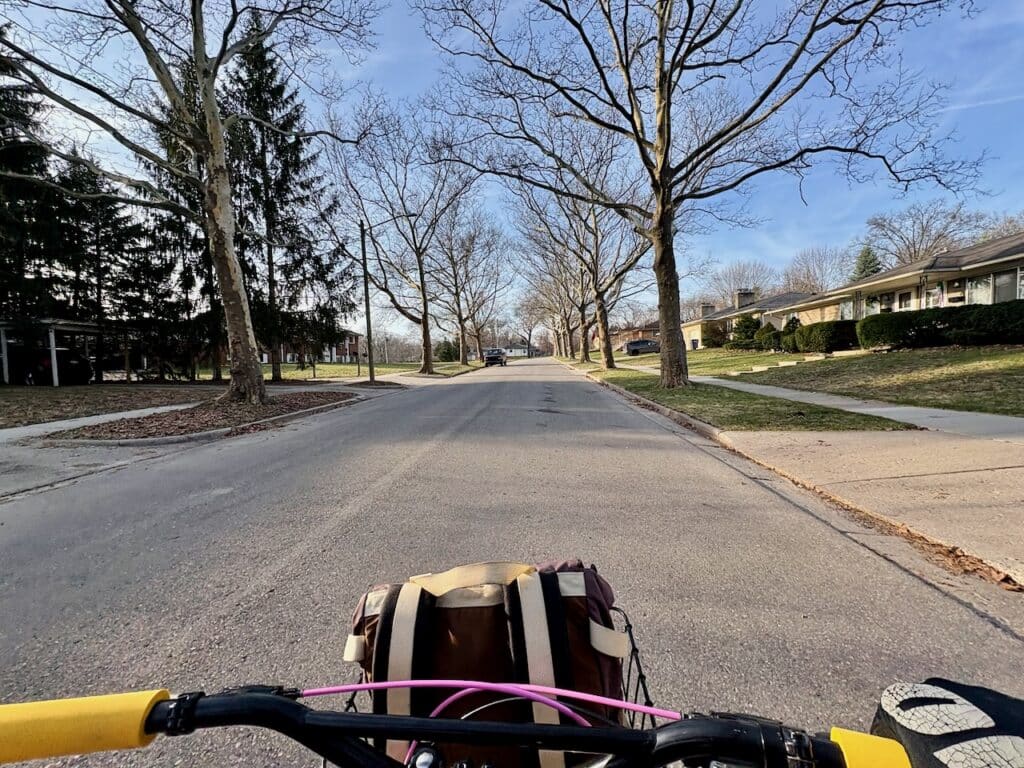
Here’s what you’ll probably find: Google Maps’ suggested bike route is just ok. It doesn’t care whether you enjoy the ride, just that the route is efficient. What you’re actually looking for are quiet neighborhood streets and any dedicated bike infrastructure nearby — and the test ride is how you find them.
Which brings me to something worth sitting with for a second.
When we think about getting from A to B, we’re pulling from a mental model built almost entirely around driving. “What’s the fastest way to get there?” Main roads. The path we already know. We’re so conditioned to that framework that we don’t even notice it’s running in the background when we’re on a bike.
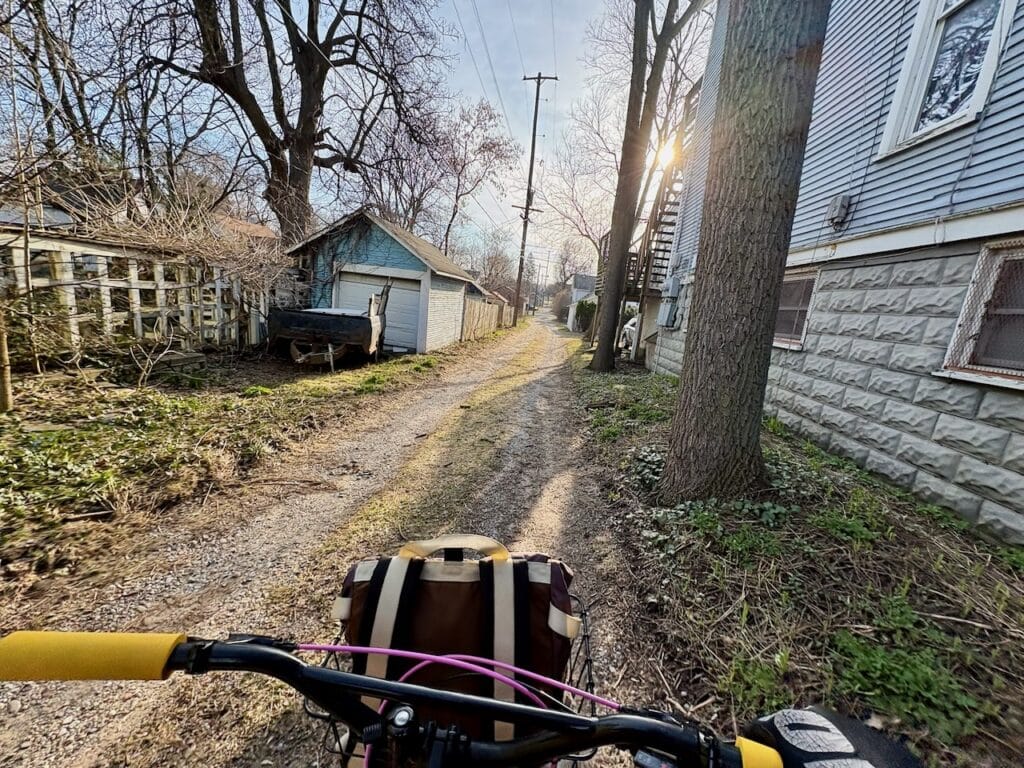
But those quiet neighborhood streets running parallel to the busy ones you’re used to fighting? They’ve always been there. They’ve just been waiting for you to have the curiosity to go explore and find them.
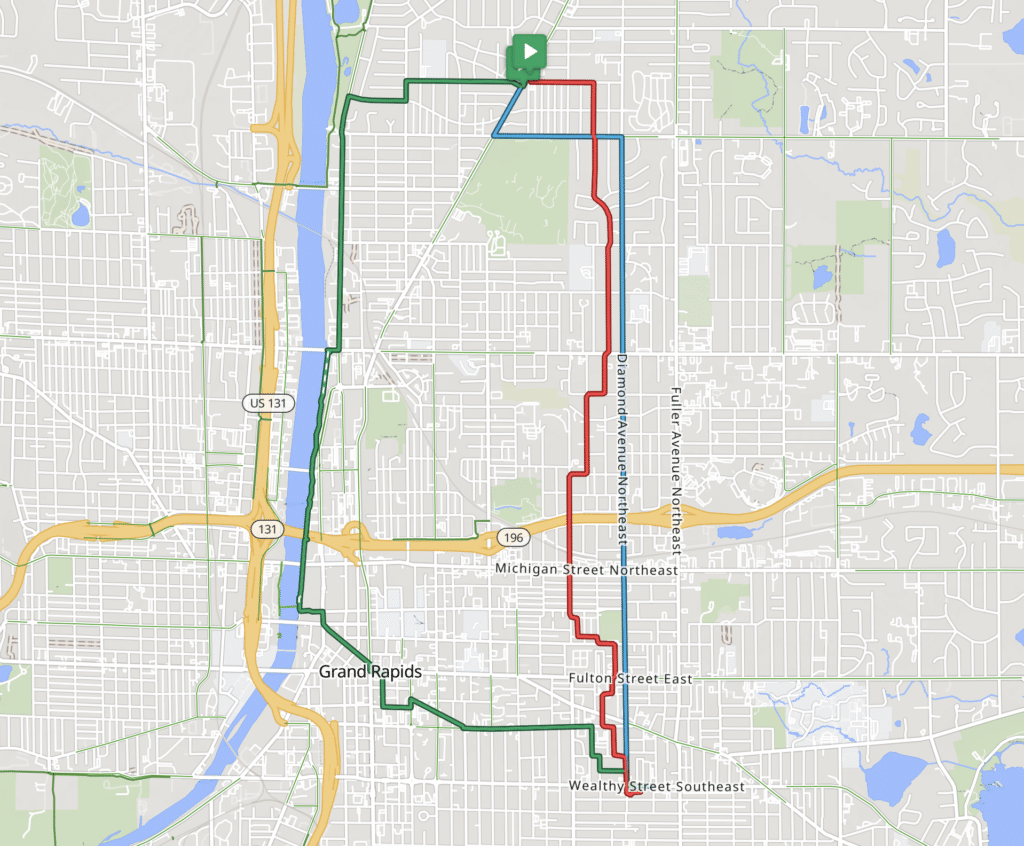
Here is my route to our office. The blue line is Google Maps’ suggestion — a straight shot down a busy road with no bike infrastructure. Four miles, efficient, not enjoyable. The red line is my actual daily route: quiet side streets and alleyways, 4.2 miles. The difference is two-tenths of a mile and a completely different experience. The green line is a longer option along the river that I’ll take when I want the ride to feel less like a commute and more like a reason to be on a bike. That one’s 5.8 miles — a great reminder that adding distance isn’t always a sacrifice.
You Don’t Need What You Think You Need
The assumption most people carry into this is that bike commuting requires a specific setup — the right bike, the right gear, some threshold of readiness they haven’t quite hit yet. It doesn’t.
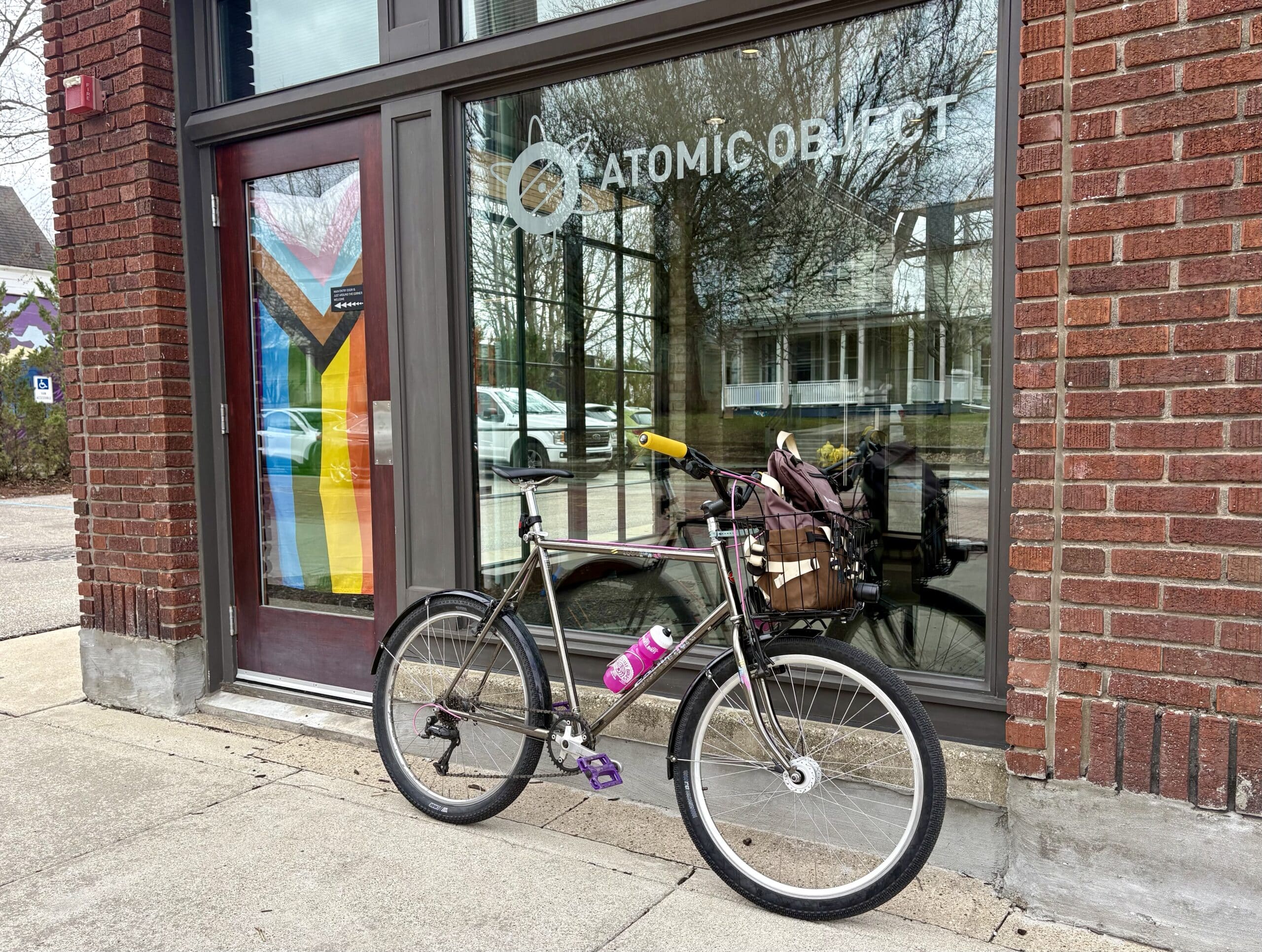
My commuter is an old Schwinn with rim brakes. I have nicer bikes — but this one is perfect for commuting because it’s not fancy. I don’t have to think about it. It gets knocked around, it doesn’t ask much of me, and it gets me to work. Whatever’s already sitting in your garage is almost certainly fine.
You don’t need special clothes. You don’t need commuting-specific anything, really — with two exceptions. A helmet and lights (both front and taillight). Run these even during the day, they help a lot with being seen. The helmet is a no brainer, don’t ride without one. That’s it. These are a small investment if you don’t already have them, and the only things on this list I’d call non-negotiable.
Here is a quality starter kit for lights if you need them. Even better, head down to your local bike shop. They’re a great resource and probably have some stuff on hand.
What to Wear (Less Than You Think)
This one comes with a rule of thumb that sounds counterintuitive until the first time it saves you: dress for 10-15 minutes into your ride, not for the moment you walk out the door. Your body generates real heat once you’re moving, and what feels like the right number of layers in the driveway will feel like two too many by the time you’re halfway there.
If it’s chilly, something to cut the wind without being too thick — a soft shell jacket or windbreaker — takes the edge off without cooking you.
“Be bold, start cold.” You’ll thank yourself when you arrive at the office like a normal person instead of someone who just stepped out of a sauna.
A Few Things Worth Keeping at the Office
This is one of those things that sounds fussier than it is. A spare pair of shoes, basic toiletries, and a backup shirt and pants tucked somewhere at your desk or in a spot around the office. I have a small bin in one of our bathrooms with these and it has been really helpful. You’ll forget they’re there most days — until the one day you really need them, or until July rolls around and that backup shirt starts earning its keep.
On carrying your stuff: a backpack works fine and is the obvious starting point. But if you want a low-effort upgrade, a simple basket gets the weight off your back entirely and makes loading up in the morning almost thoughtless.
I have this Wald basket on my commuter and it’s one of the best additions I made. They’re affordable, US made, found in many bike shops (who can also help you out with installation) and have a lot of different sizes and styles.
Lay It Out the Night Before
This one is less about logistics and more about how brains work in the morning. If you’re making the decision to bike to work while you’re half-awake and staring at your coffee, you’re going to talk yourself out of it. Lay everything out the night before. The decision is already made — morning-you is just executing it.
And on that note: you don’t have to commit to doing this every day, or even regularly. Pick one day, commit to it the night before, do that one day and see where it goes from there.
A Note on Distance (And Whether This Is Even For You)
If you live five or six miles from work, that might feel like a lot. It’s about 30-35 minutes on a bike — probably not that far off from your drive once you factor in traffic and parking. If you’re closer than that, the math gets even easier.
Bike commuting isn’t for everyone, and there are situations where it genuinely doesn’t make sense. But if you’re reading this, you’re probably closer to the threshold than you think and there are some very real benefits. There’s something that happens when you arrive at work having already done something. Your body has been moving, you’ve had a few minutes alone with your thoughts on streets you’re getting to know, and you beat the carbon footprint of everyone in the parking lot. The science on exercise and mood is pretty well established — but honestly, a lot of it is simpler than that. You did something you weren’t sure you could do, and now your day has started on your terms.
That’s hard to put a number on. But it’s real, and it shows up every time.