

At Atomic Object, we build great software, and we partner with our clients to help them figure out what the right thing to be building is in the first place. As software consultants, we show up as strategic thought partners who bring perspective on direction, tradeoffs, and timing. Getting that right requires a shared understanding of the landscape. What’s working? What isn’t? What’s possible? What’s at risk?
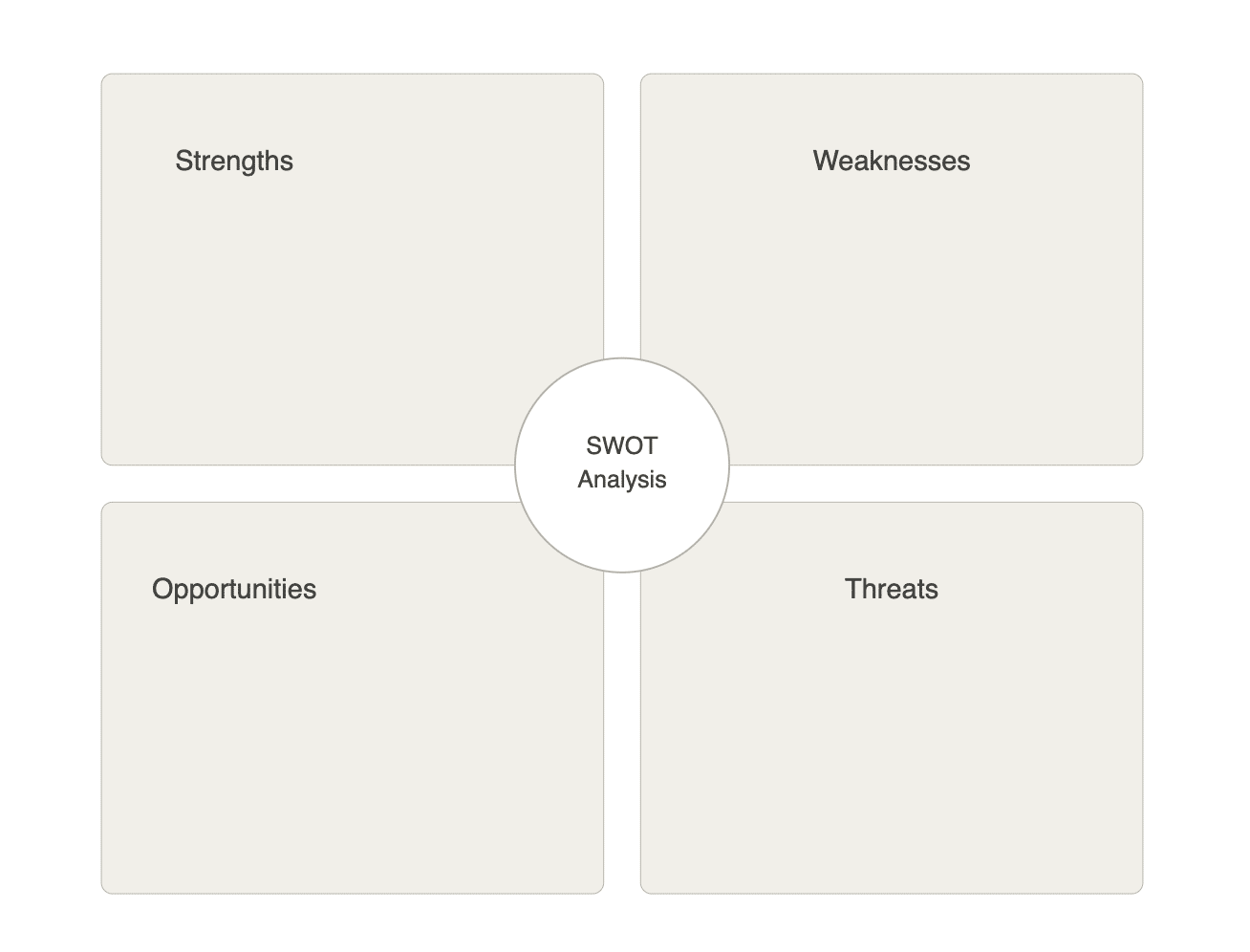
Running a SWOT (Strengths, Weaknesses, Opportunities, and Threats) analysis can help frame a strategy. SWOT tends to show up at critical points in software delivery: kicking off a new product or initiative, making go/no-go decisions on features or direction, setting priorities in a strategic planning session, or aligning stakeholders before committing to a plan. In all of these situations, the goal is the same: get the right people aligned on what’s true and then decide what to do.
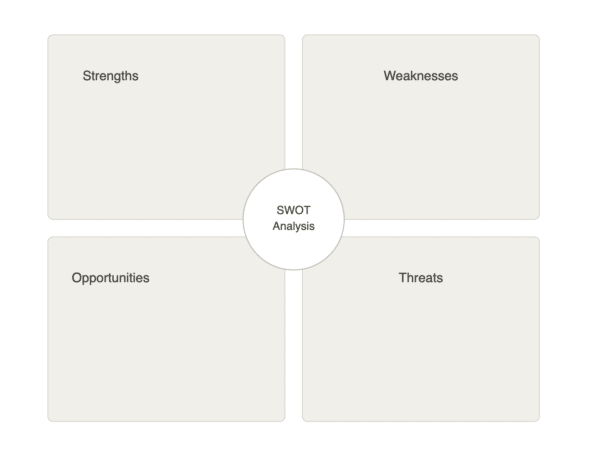
SWOT is one of those frameworks that looks and feels intuitive. “Strengths”, “Weaknesses”, “Opportunities”, “Threats”. These headings are straightforward, the four-box structure is simple, and many of us have participated in at least one SWOT analysis exercise at some point. That familiarity and approachability is part of what makes it such a useful tool. It’s also what makes it easy to underestimate or not use to its fullest potential.
In my experience facilitating and participating in SWOTs, the framework tends to work best when teams have a shared understanding of what actually belongs in each quadrant. Without that shared understanding, it’s easy to end up with a filled-out diagram that’s hard to act on. The good news is that a little clarity upfront goes a long way. Let’s walk through the steps of a simple SWOT with a real (and very serious) challenge in my life. How can I go about optimizing my backyard to attract more interesting birds?
Step 1 – What the Four Quadrants Are Really Asking
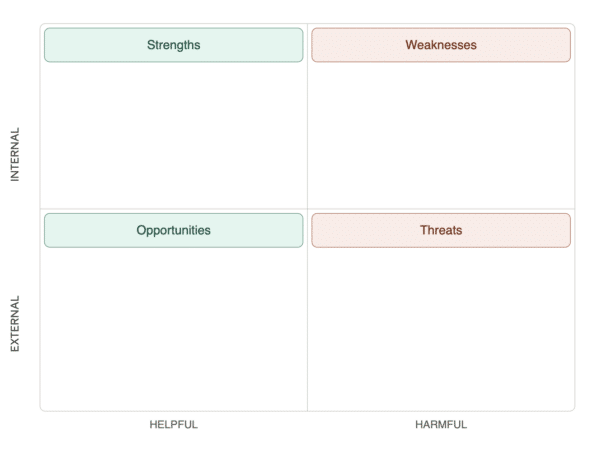
The four quadrants in the first step of a SWOT analysis aren’t just four buckets for general brainstorming. They’re organized along two axes that give the framework its analytical power: internal vs external and helpful vs harmful.
Strengths and Weaknesses are internal. These should reflect the current state of what’s true about you, or your team, product, and/or organization. What are your capabilities, resources, and constraints that are within your sphere of influence?
Opportunities and Threats are external. This is often where I see the framework misused. Opportunities and Threats should capture conditions that exist out there externally, independent of what you decide to do about them. An opportunity isn’t something you’ve decided to pursue. It’s a favorable external condition that could be captured. Think along the lines of market competitive landscape, emerging technologies, macroeconomics, sociopolitical factors, etc. The decisions about whether and how to act on these come in the next step.
Let’s Try It! Case: The Backyard Birder
Spoiler: it’s me. I’m the backyard birder. My husband and I moved into our current home in Ann Arbor about a year and a half ago, and it’s been a wonderful spot to start my journey into birding from. Our backyard backs up to the Eberwhite Woods, which gives me a natural advantage. I’m new to intentional backyard birding and still figuring out my setup, but I’m excited and enthusiastic about this!
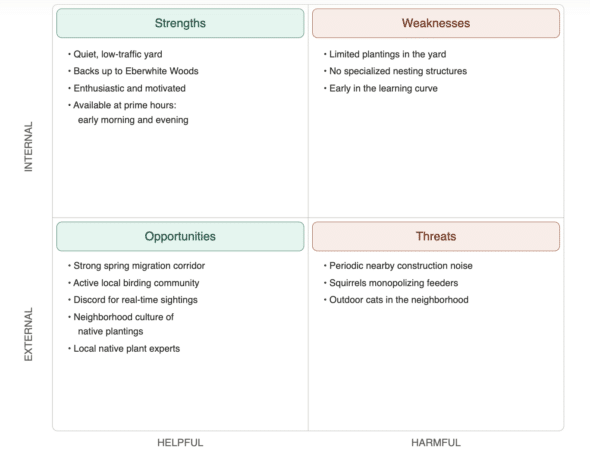
Here’s what a simple first pass through the four quadrants looks like:
Strengths (internal, helpful)
- Quiet, low-traffic yard with minimal disturbance for visiting birds
- Home backs up to the woods, with a mature tree canopy just beyond the yard
- Enthusiastic and motivated to better my setup for attracting birds
- Backyard birding availability during prime hours (early morning and evening)
Weaknesses (internal, harmful)
- Limited plantings in the yard itself
- No specialized nesting structures installed
- Early in the learning curve and I feel uncertain about where to start
Opportunities (external, helpful)
- Strong spring migration corridor runs through the Ann Arbor region
- Exceptionally active and supportive local birding community
- Birding discord channel sharing real-time sightings, tips, and expertise
- Neighborhood culture of native plantings and natural yards
- Local native plant landscape experts
Threats (external, harmful)
- Nearby home construction that can be noisy periodically
- Squirrels reliably finding and monopolizing the feeders
- Outdoor cats in the neighborhood
It’s worth noting what’s not in the Opportunities column. Ideas like “Plant more native species” or “Ask for advice in the birding discord channel”. These are responses to opportunities. In other words, these are strategies, and they belong in the next step! Being mindful to not jump ahead keeps the analysis clean and makes the strategic thinking that follows more meaningful.
Step 2 – The Cross Analysis that Many SWOT Users Skip
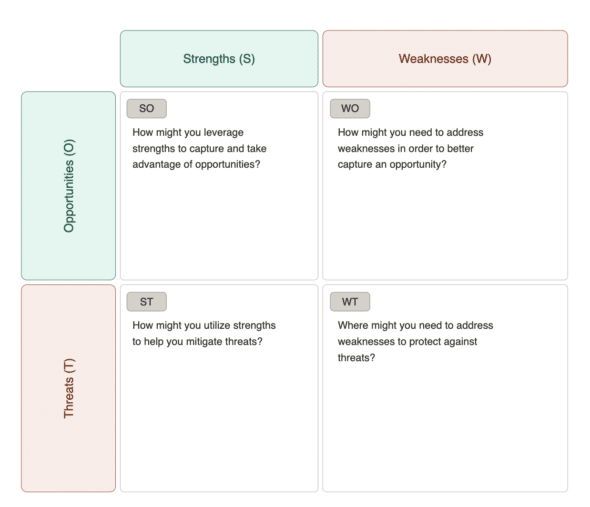
- Okay here’s where SWOT starts to get good. Once the quadrants are filled in, you can pair them to answer strategic questions and generate options to pursue.
- SO (Strengths x Opportunities): How might you leverage strengths to capture and take advantage of opportunities?
- ST (Strengths x Threats): How might you utilize strengths to help you mitigate threats?
- WO (Weaknesses x Opportunities): How might you need to address weaknesses to better capture an opportunity?
- WT (Weaknesses x Threats): Where might you need to address weaknesses to protect against threats?
Here’s one option for each pairing, with my backyard birding example. In practice, you could have many options!
- SO: The migration corridor is active in spring (O) + I’m willing to be up early before work and backed by mature woods (S) → Have my daily coffee and breakfast on the deck around sunrise during peak migration to maximize sightings at the wood line
- ST: Construction noise is unpredictable (T) + I’m flexible about timing (S) → Monitor construction noise and shift to evening birding when mornings are disrupted
- WO: Limited plantings make the yard less attractive (W) + neighborhood culture of native yards and local landscape experts → Use neighbor yards as inspiration and local experts as a guide to prioritize which native plantings will have the highest habitat payoff first
- WT: Early in the learning curve (W) + squirrels taking over feeders (T) → Start with a single well-placed, squirrel-resistant feeder to test what works before investing in a full feeder setup overhaul
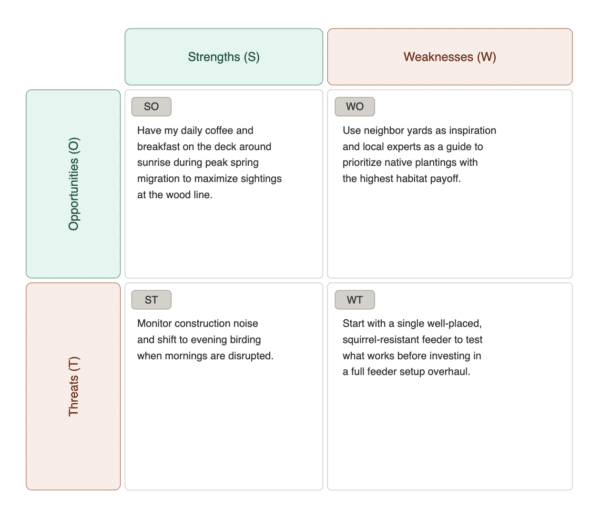
Now, understanding that these aren’t “random brainstorming ideas”, but rather, strategic options that have emerged directly from the interaction between agreed upon internal and external factors, we can more clearly see the power of the SWOT in facilitating strategy. It helps strengthen the coverage and breadth of the brainstorming ideas. That’s the power of doing the quadrants as intended first!
Step 3 – Get From Options to Action
Ok, so after cross-analysis, we now have a list of strategic options. The final step is deciding where to focus and when. One effective method to help with this decision is plotting out effort vs impact. Which options are both achievable and meaningful, given your current constraints? Picking one or two concrete next steps, and being able to articulate why you picked them, is what transforms a SWOT from a static artifact into an actionable plan.
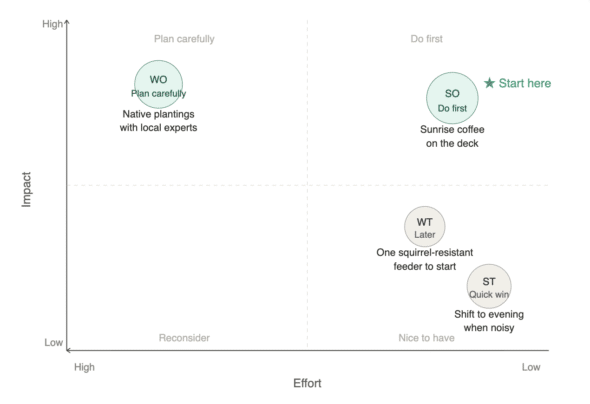
For my backyard, the highest leverage move is the SO option. I’m already an early riser, and shifting my morning routine so that I’m spending a bit of enjoyable time outdoors before work is an easy way to capture the opportunity to see more birds as spring migration picks up. It’s low effort, immediately actionable, and has the potential for high impact.
From there, I can choose to tackle the higher-effort WO option next, or knock out a quick win. For me, I’d like to focus on the high-value option, and a good first step is reaching out to a local landscaping expert, which in and of itself is a low effort task.
Happy SWOT-ing and backyard birding!
SWOT is a genuinely powerful framework, and it’s one worth using well. The quadrants can appear to be deceptively simple, but taking a moment to understand what actually belongs in each one, especially the distinction between internal and external factors, unlocks a second step that many SWOT exercises never get to. The next time you’re facilitating or participating in a SWOT, fill in the boxes thoughtfully, run the cross-analysis, and let the strategy emerge.
Now, I’m off to go make sure I have my coffee stocked for my new morning routine, and I’m reaching out to a local landscaping expert for some consultation on plants!