

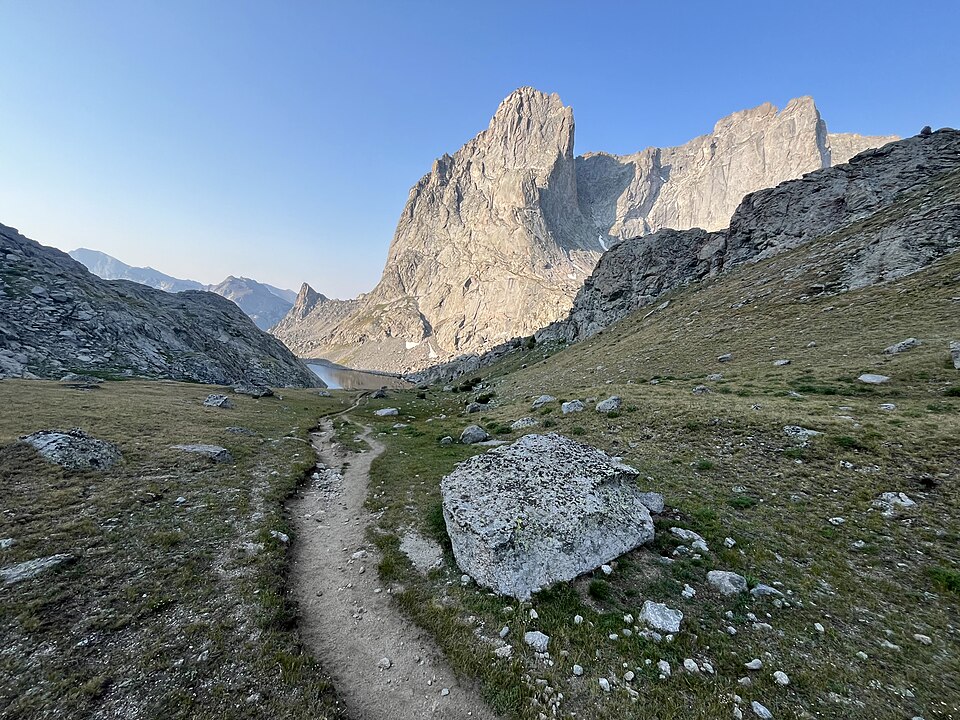
This summer, I spent a week thru-hiking the Wind River Range in Wyoming with three friends. For the uninitiated, a thru-hike means you carry everything you need on your back: food (rationed carefully by day), gear, shelter, and a couple changes of clothes—if you’re lucky. No resupplies. No turning back.
Over seven days and about 50 miles of trail, we encountered all the expected challenges and a few surprises. Those included wildfire detours, lightning storms, and a “rest day” spent hiding in our tents from nonstop rain. Still, we made it through, soaked and sore and smiling.
Somewhere between dodging thunderstorms and rationing trail mix, I realized how much endurance sports have in common with consulting. Here are five lessons from the trail that show up just as often in our work at Atomic.
1. Balance the big picture with what’s right in front of you.
You don’t hike 50 miles in one shot—you do it step by step. Some days are about grinding out the miles. Others are about not getting blown off a pass by a storm. And always, you’re weighing where you are now against where you need to be tomorrow.
Consulting requires the same kind of mental zooming. Yes, we care about the product vision, the roadmap, the release strategy. But we also need to focus on what’s immediately in front of us: unblocking a teammate, solving the bug, making the next delivery decision. Momentum comes from managing both at once—being strategic and tactical.
2. Navigating uncertainty takes patience and judgment.
Even with detailed maps and a GPS, there’s no way to fully predict the backcountry. Trails shift. Weather changes. Information is incomplete. On this trip, we spent three days hiking in and out of storms—thunder, lightning, even hail. We got soaked more than once, and our pace was slower than expected. A short day could suddenly become a long one.
Consulting isn’t all that different. You plan, you estimate, you check your assumptions—and then something changes. Requirements evolve. A technical constraint appears. Priorities shift. Good consultants don’t panic; they assess, adapt, and move forward thoughtfully.
3. Be ready to pivot when plans change.
The biggest curveball came before we even started hiking: a wildfire broke out near our original entry point. Just like that, our first two days had to be scrapped. We rerouted, adjusted our mileage, and recalculated how to reach the same final destination from a different angle.
That kind of pivot shows up all the time in software. Maybe a client shifts direction or a third-party tool fails. Maybe a feature turns out to be more complex than expected. In any case, being flexible—while still keeping the end goal in focus—is a key part of delivering great work.
4. Celebrate the little wins.
When the weather finally broke and we had a dry hour to make camp? Huge win. When we got the stove going despite the wind? Even better. These weren’t epic milestones—but they were the moments that kept morale up.
On a long consulting project, it’s easy to get tunnel vision about the final launch. But celebrating the smaller victories—getting a feature across the line, solving a tricky bug, hearing a “thank you” from a client—helps everyone stay motivated. It reminds us that progress is happening, even when the finish line is still a ways off.
5. Check in with your team.
Hiking in a group means you’re constantly checking in: How’s your energy? How are your feet? Want to stop for water? On our rest day—thanks to a relentless rainstorm—we didn’t get much actual rest. But we did have time to reconnect, re-plan, and talk through how everyone was feeling about the second half of the trip.
Consulting teams need that same rhythm. Whether it’s a formal retro or a quick Slack thread, regular check-ins keep everyone aligned and supported. They give people space to speak up early, before small discomforts turn into bigger problems.
Endurance: Embracing the Terrain
Endurance adventures don’t always go as planned. Neither do consulting projects. But they both involve unknowns, tradeoffs, and teamwork. They both ask for clear communication, thoughtful planning, and the ability to change course when needed.
And sometimes, the detours are where the best stories (and lessons) come from anyway. Here’s to the next adventure.