

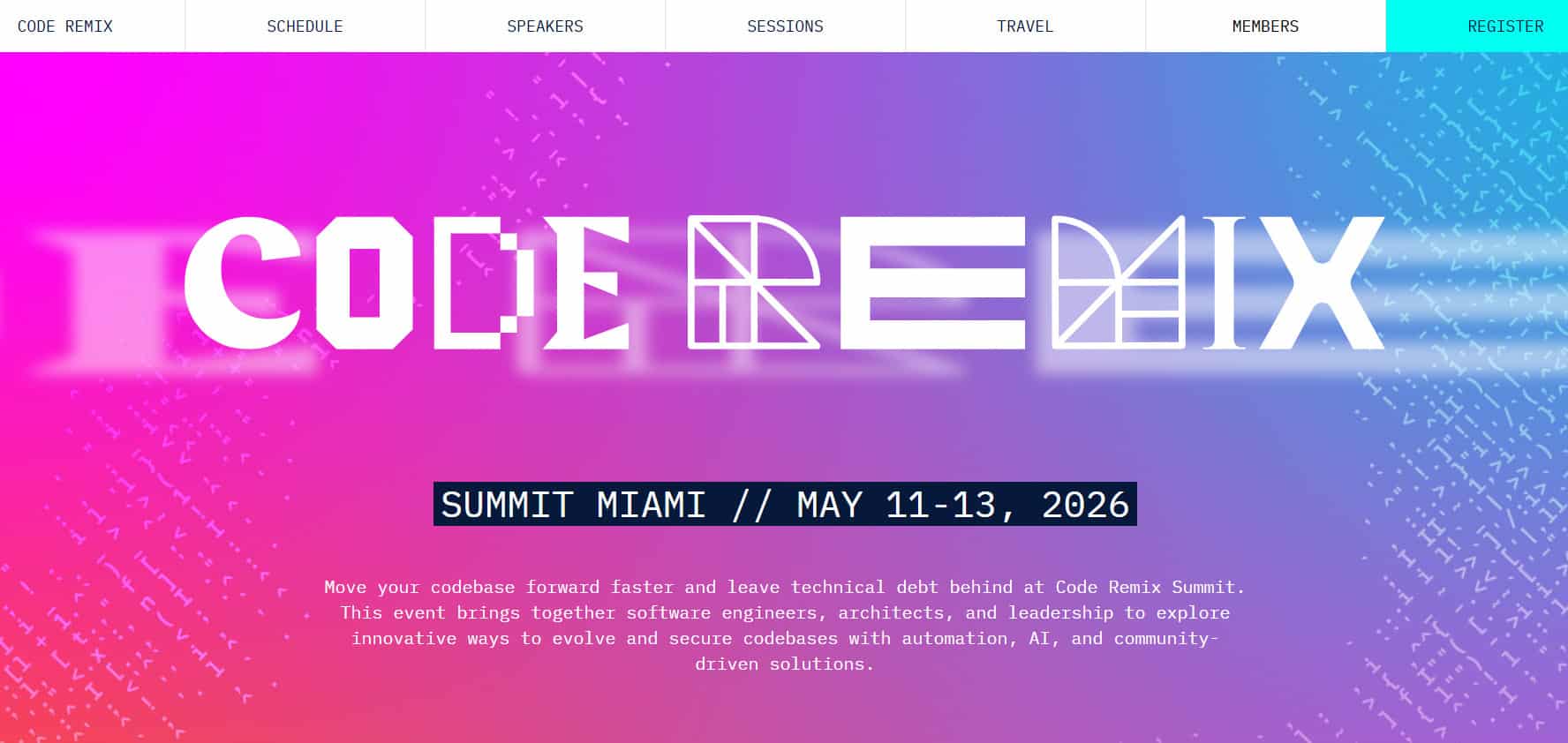
As a software developer at Atomic Object, one of the expectations (and perks) of the job is taking advantage of professional development opportunities outside of work. Recently, I attended Code Remix, a developer-centric conference in Miami as my annual professional development experience. Through the conference I got to learn about a lot of really interesting ways that top companies were thinking about AI, and I left feeling inspired and energized.
Burnt Out on “The AI of It All”
These days, it feels like every other LinkedIn post or “water cooler” conversation centers around how generative AI is changing the software industry. While I agree that there’s a huge shift happening and we need to talk about it, I’ll admit I’ve started feeling a bit burnt out on “the AI of it all.” Going into Code Remix, I was a little apprehensive because a lot of the talks seemed to be centered around how AI was massively speeding up the work these companies could do. Which felt like a story that I’d heard a million times by that point.
I was pleasantly surprised by the nuanced view of agentic development presented at Code Remix. In a world of wildly unbalanced takes on the purpose and usefulness of AI in software development, the presenters and attendees were having thoughtful and important discussions, which I’ll dive into here.
One Bottleneck Replaced by Another
A huge theme spanning across the conference’s talks was the idea that while generative AI is speeding up the actual writing of lines of code, that doesn’t necessarily mean equal gains across the software development lifecycle. In most cases, one bottleneck is just replaced with another. Instead of the bottleneck being writing code, maybe now it’s developing solid requirements and breaking down work quickly enough to make the development speed up actually worth something. Or perhaps now that we’re able to generate thousands of lines of code in minutes, the bottleneck moves to the PR review stage.
Many of the presentations I attended spoke to these mystical bottlenecks. But the most interesting idea that came out of this theme was… maybe coding was never the bottleneck at all.
I remember hearing this and feeling like I’d just gotten a huge breath of fresh air. As a junior developer, there’s a lot of speculation about how AI models like Claude and Cursor will replace us. And for writing boilerplate code, sure, that might be true. However, if we’re seeing massive performance improvements in writing feature code and the software development lifecycle isn’t actually speeding up proportionally, and we’re realizing that writing code was never the bottleneck to begin with, then there’s still real value in being a software engineer. It just might look a little different than what we’re taught to expect in school.
What Companies Are Actually Doing With AI
A large focus of the other talks I attended was the creative ways major companies are utilizing AI to unblock bottlenecks in other parts of the development process. I learned about how Meta is using AI for continuous improvement of their codebase and for identifying high-risk changes before code gets merged. I heard from executives at Thoughtworks about how they thought AI was changing the role of software engineers and how they planned to ethically and considerately use those tools for large-scale organizational change.
These talks were energizing because they weren’t just about how anyone can build massive applications now. Don’t get me wrong – I’m genuinely happy that we’re lowering the barrier to entry for coding and that more people will get to try it out as a result. With that said, it felt great to be reminded that despite a generative AI model being able to write a lot of code for us, there’s still some craft here. Still some artistry. It just might look a little different. Instead of coming up with a clever solution to a coding problem, it might look more like investing in research to build tools that monitor and continuously improve the codebase, freeing up developer time for more interesting work. Or it might look like finding ways to invest in stronger QA processes.
Conclusion: Takeaways from Code Remix 2026
The main thing I took away from Code Remix was that the part of my job I love most – solving interesting problems – isn’t going anywhere. It was never just writing code that made projects take longer than expected. There will always be another bottleneck. Now, we just have a new set of tools to get after fixing them. And personally, I’m choosing to find that thrilling.