


One of my favorite parts about working at Atomic Object is the strong emphasis on professional development. This quarter in the accelerator program, we had the opportunity to choose our own focus area. Following a strong recommendation, I decided to read ‘Agile Estimating and Planning’ by Mike Cohn. As a recent college graduate with only internship experience, I wanted to strengthen my ability to collaborate effectively in a software team, work within large projects, and operate more effectively in the sprint framework.
I’ve always believed that growth requires intentionality. Just like losing weight, progress does not happen by accident – it takes deliberate effort and focus. My strategy for this quarter was to read a section of the book and choose one concept I could improve upon and implement that for a month. At the end of the month I reflected on what worked, what didn’t, and whether it was worth continuing. Now to the fun stuff — my key takeaways!
Takeaway #1: Having two things to work on is better than one.

The idea is simple: working on one task at a time is like putting all of your eggs in one basket, which as my parents have told me all my life, is a bad idea. Now an important note is that if you work on more than two things at once, you get diminishing results. The goal isn’t to literally multitask, but to have a second task available for when you’re blocked on the first. This can help you maintain a higher velocity by remaining productive in another task when you hit a roadblock on one.
In software development, it is not uncommon at all to become blocked on things due to an open question, a blocking story, PR reviews, external dependencies, and the list goes on and on. In hindsight, this has been a very effective strategy for me for the month I implemented it. That said, switching contexts is cognitively demanding, so it’s important to be intentional about when it makes sense to switch.
Takeaway #2: Try the “tracer rounds” technique.
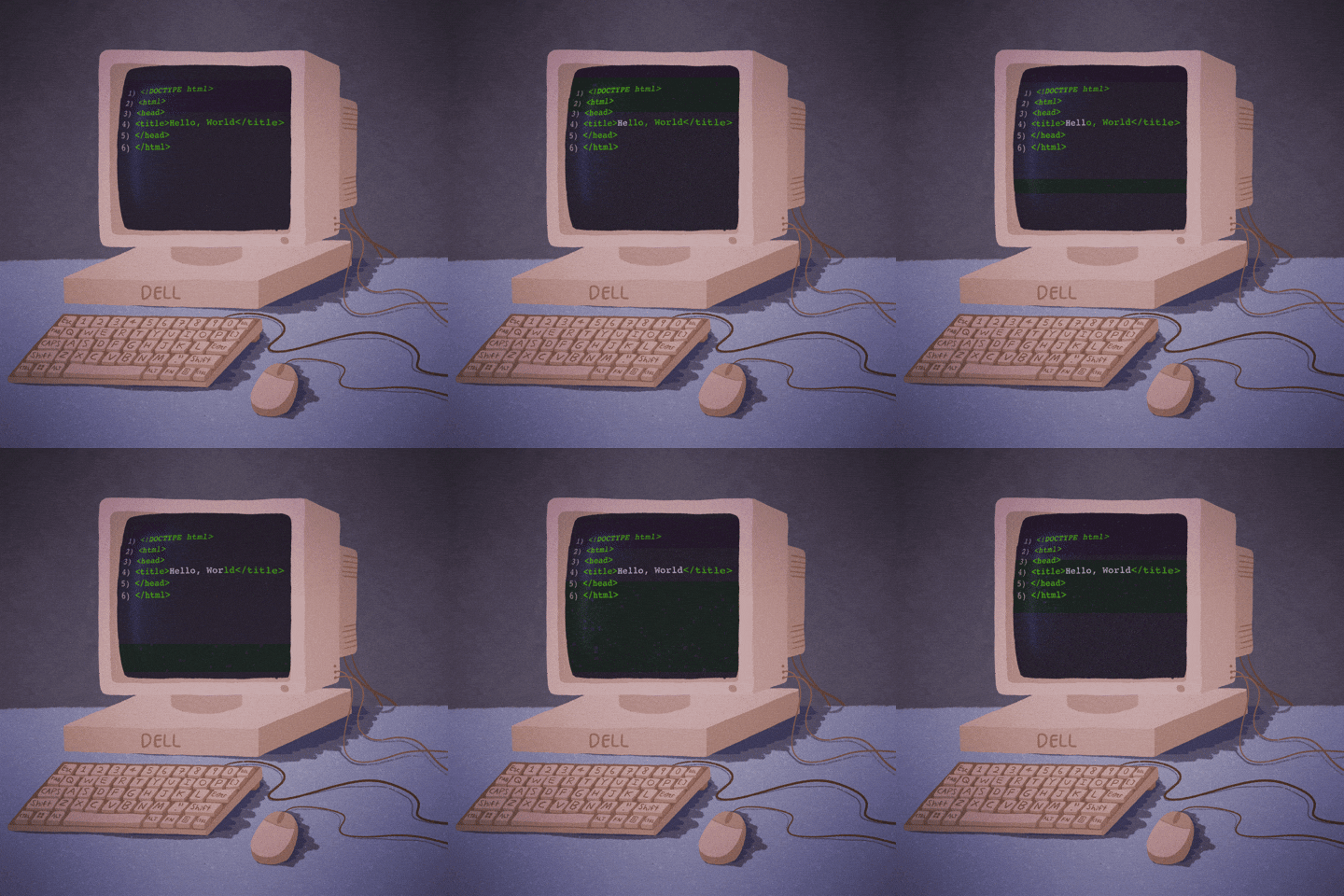
In large projects, developers often need to touch multiple layers of a codebase — or even multiple repositories. The “tracer round” technique is about starting with a minimal, end-to-end “hello world” implementation that connects every layer you’ll need, before filling in the details.
Since integration points are often where most issues arise, this approach helps surface those problems early. I used this strategy in a story that touched three different repositories, and it made the process much smoother. Once the tracer round was working, the rest of the work felt much more straightforward. Not every story calls for this approach, but when it fits, it can save a lot of time and frustration.
Takeaway #3: Try a daily whiteboard.
This one came from a coworker’s recommendation, and it’s been a game-changer in my daily routine. I use a small whiteboard to plan my day, list meetings, jot down notes, and track ongoing work. It gives my day structure, helps me time-box tasks, and provides that satisfying moment of crossing things off as I go. Anything left unfinished carries over to the next day — usually earning top priority. It’s not revolutionary, but it’s a small habit that’s made my days more organized and enjoyable.
Professional development doesn’t always have to mean big, formal goals — sometimes it’s about finding simple, effective habits that make your day smoother, your work more deliberate, and your impact a little stronger each sprint.
I love the point about having two things to work on at once. It’s not about counting up all the problems, but rather, providing options so that if I’m stuck on one, it means I can move back to the other one instead of beating myself up about being stuck on the first one… I like that! And it is definitely how I get work done, so why wouldn’t it also be a good strategy for self improvement?