

Article summary
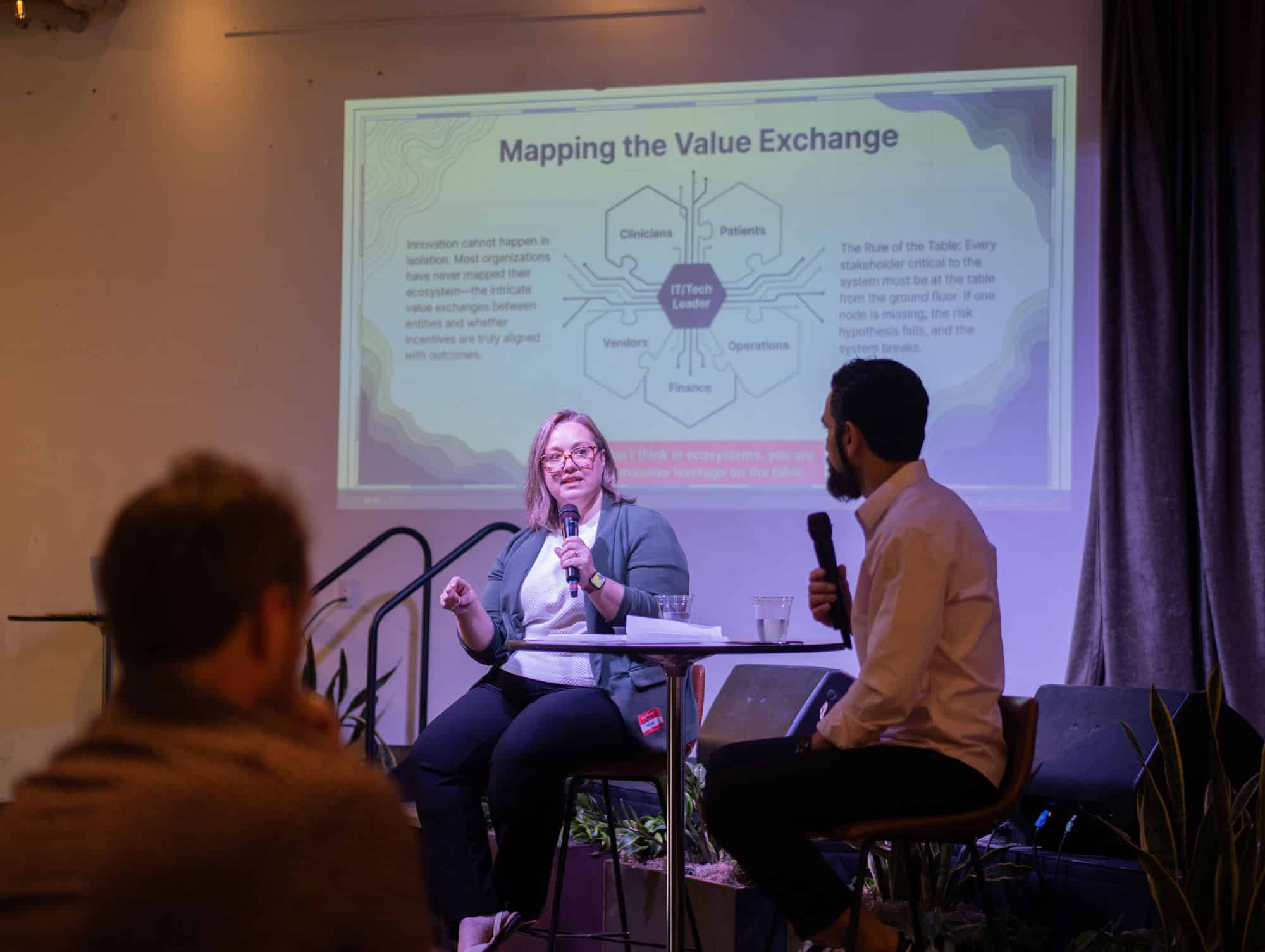
I sat across from Michael Levy at a room full of healthcare and technology leaders recently. We were talking about why digital transformation projects fail at such a startling rate, 95% of them, by some estimates.
His answer surprised the room.
It wasn’t the technology, the budget, or the vendor. It was this: organizations don’t have discovery as a core competency. They don’t have a reliable, judgment-free mechanism for surfacing problems from the people closest to the work.
So when a new system gets deployed, nobody owns it because nobody owned the problem it was supposed to solve.
This stuck with me because I’ve watched it play out on project after project. The moments where things stall usually aren’t technical. They’re human. Someone knew the process was broken years before the kickoff. Someone on the floor saw the gap the new tool was supposed to close. But there was no safe container for that information to travel up, and no one was formally asking.
Problem Discovery
What Michael calls “problem discovery” is the practice of creating a structured space for frontline workers and leadership to surface problems openly, without ego or retaliation. It isn’t a workshop or an offsite. It’s a cultural infrastructure question. Either your organization has built the capacity for it, or it hasn’t.
And if it hasn’t, no amount of technology is going to change that.
But surfacing the problem is only half the work. Maybe less. The real value on any team is the person who can make sense of the problem and the opportunity at the same time. Who can frame what’s broken in a way that people can actually see and own? Who can articulate what needs to happen, not a solution, but the conditions that would make progress possible, in a way that the organization can move toward?
That skill is rarer than it sounds. It’s not analysis or facilitation. It’s translation. Taking something diffuse and frustrating and giving it a shape that invites action.
Teams that have people like that don’t just surface problems faster. They close the loop faster, too.
A K-Shaped Opportunity
There’s a harder version of this conversation that came up near the end of the evening. Someone in the room described feeling stuck, motivated to push for change inside a large organization, but unable to get the people with authority to see the urgency.
Michael’s framing was blunt: this is a K-shaped moment. Some organizations are building the cultural infrastructure now: the discovery practices, the problem-to-solution feedback loops, and the psychological safety to tell the truth early. Those organizations are going to pull ahead. The others aren’t broken. They’re just optimized for a world that’s moving on without them.
I left that conversation thinking about what it means to be a true partner to a team in that moment. Not just the firm that builds the thing, but the one that helps create the conditions for the thing to land.
That starts with asking better questions earlier. What’s actually broken here? Who knows it? What would have to be true for them to say so?
The unlock doesn’t come from the software. It comes from whether the people around it own the problem.